


E-book
Prototype of the GUIDE's key problem solution
Prototype of the GUIDE's key problem solution
Methodology No.:
Couldn't load pickup availability
The publication summarizes the key results, findings, and work carried out during the prototype phase of the Post-Accident Care project. The main output of the project is the design and validation of the concept of a Personal Guide after a road accident. The project aims to improve psychosocial care for individuals affected by road accidents, thereby reducing the risk of developing mental disorders such as post-traumatic stress disorder. The proposed concept addresses systemic fragmentation and the absence of a unified point of reference that would guide affected individuals through the challenging period after an accident, when their lives often "fall apart into a folder" of administrative and legal requirements.


Detail
Author
- Červinka D.
- Vošická Buráňová V.
- Řihák T.
- Salačová D.
- Neusarová J.
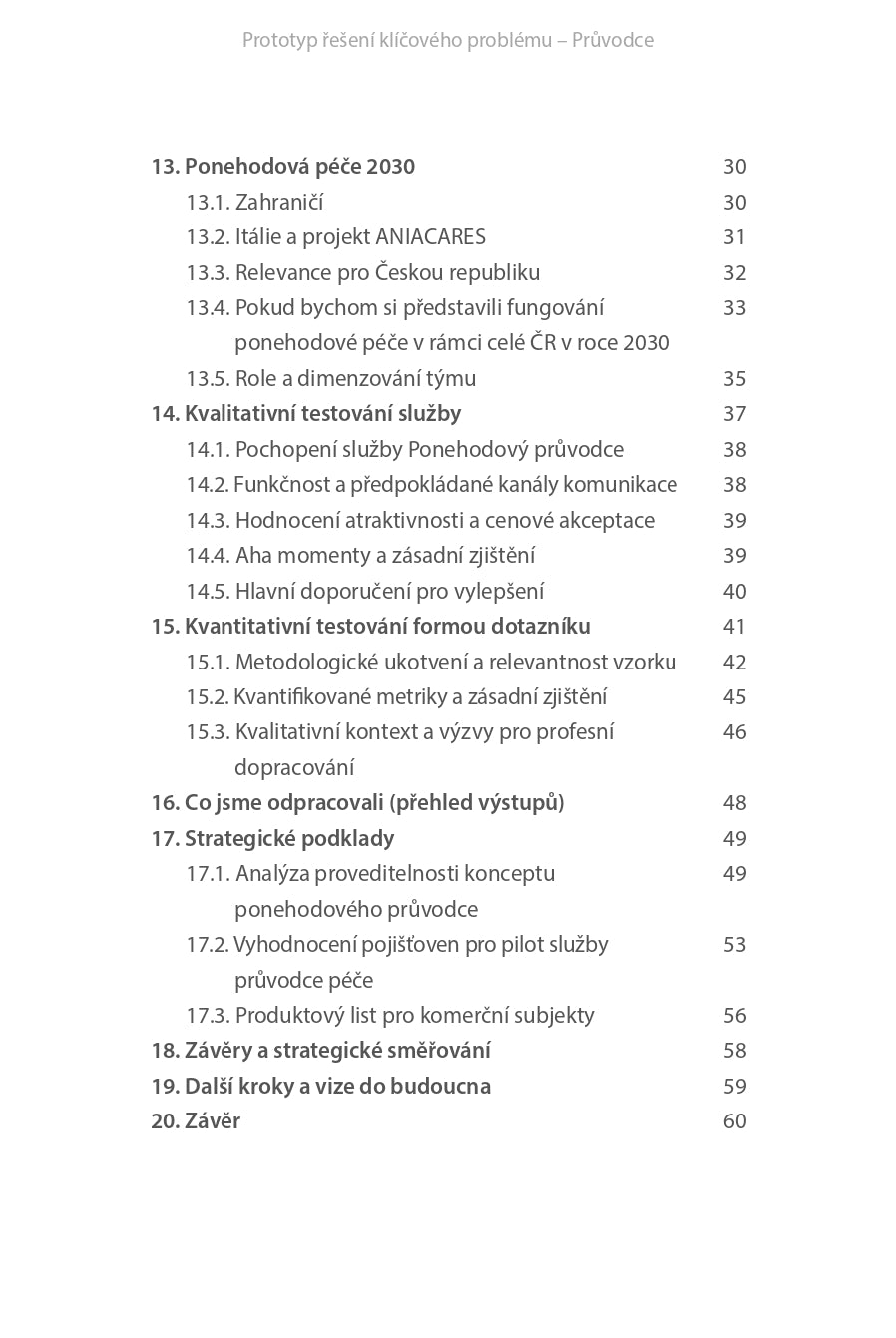
Content
1. Context
2. Why we need a Post-Accident Guide
3. Service definition
4. How the service works
5. Prototype verification process
6. Form and process of support
7. Target group definition
8. Communication of the service to the public, affected persons
8.1. Where communication originates – who coordinates it
8.2. Key communication channels
8.3. Secondary contact points – first days after the accident
8.4. Media and social communication
8.5. How to "kickstart" the project – first phase (pilot communication)
8.6. Main communication principle
9. Definition of the guide persona
9.1. Key competencies and knowledge
9.2. British inspiration model: Caseworker in the "Road Victim Service" program (Brake, UK)
10. Strategy and sustainability
11. Service budget and connection to the non-profit sector
11.1. Realistic pilot budget
11.2. Commentary on the proposed budget
12. Post-accident care as an extension of the "Bouračka" application
12.1. What is missing – potential areas for improvement
13. Post-accident care 2030
13.1. International examples
13.2. Italy and the ANIACARES project
13.3. Relevance for the Czech Republic
13.4. If we were to imagine the functioning of post-accident care throughout the Czech Republic in 2030
13.5. Role and sizing of the team
14. Qualitative testing of the service
14.1. Understanding of the Post-Accident Guide service
14.2. Functionality and anticipated communication channels
14.3. Assessment of attractiveness and price acceptance
14.4. "Aha!" moments and key findings
14.5. Main recommendations for improvement
15. Quantitative testing via questionnaire
15.1. Methodological anchoring and sample relevance
15.2. Quantified metrics and key findings
15.3. Qualitative context and challenges for professional refinement
16. What we have accomplished (overview of outputs)
17. Strategic documents
17.1. Feasibility analysis of the post-accident guide concept
17.2. Evaluation of insurance companies for the care guide service pilot
17.3. Product sheet for commercial entities
18. Conclusions and strategic direction
19. Next steps and future vision
20. Conclusion
Dedication
This publication was produced with the financial support of the European Union
Colophon
ISBN 978-80-88655-64-0 (Online; pdf)
Year of publication
2026